
[wpbb post:terms_list taxonomy=’category’ html_list=’no’ separator=’, ‘ linked=’yes’]
[wpbb post:title]

[wpbb post:terms_list taxonomy=’category’ html_list=’no’ separator=’, ‘ linked=’yes’]
BY
[wpbb archive:acf type=’text’ name=’byline_author’]
Jérémy Clapin explains his mysterious new alien drama, Meanwhile on Earth.
Meanwhile on Earth screens at Metrograph on Saturday, September 7 as part of Jérémy Clapin x2, before opening in theaters on Friday, November 8.
French director Jérémy Clapin makes movies that transcend the logic of everyday life. His Oscar-nominated feature debut I Lost My Body (2019) was an animated odyssey about a mutilated hand in search of its owner, roaming across Paris over the course of a shadowy night. His follow-up, Meanwhile on Earth (2024), a Metrograph Pictures release, tracks an even more otherworldly quest. The live-action drama follows a young woman named Elsa (Megan Northam) whose astronaut brother goes missing in deep space. When she receives a strange message from the skies, she realizes an alien being has taken hold of her sibling’s destiny and will only bring him home if she complies with its ominous demands.
The narrative intrigue of Meanwhile on Earth turns on the philosophy that less is more: rather than visualizing extraterrestrials, Clapin reduces their presence to an ominous voiceover only Elsa can hear. As the narration pushes her to find a handful of individuals that the aliens can possess for their own needs, Northam delivers a haunting performance imbued with dread-and an ideal vessel for exploring the nature of loss. Despite its minimal VFX, Meanwhile on Earth conveys as much wonder and mystery around the nature of the universe as blockbusters made for quintuple the budget. The movie solidifies Clapin’s bonafides as a rising auteur of mysterious emotional journeys built out of intimate moments. You’ve never seen an alien invasion movie quite like this.
It should come as no surprise that Clapin himself doesn’t see the movie as an alien invasion story at all-nor does he even consider Meanwhile on Earth as fitting into the sci-fi category. That conclusion is up for debate, but he makes a compelling case in the following interview, in which he also discusses his trajectory as an animator, and what he expects to focus on next. -Eric Kohn
ERIC KOHN: What challenges did you face to get the resources you needed to make Meanwhile on Earth?JÉRÉMY CLAPIN: Somehow for I Lost My Body, we didn’t get any funding. It was tough. Because it was successful, though, I knew I could do something very strange for Meanwhile on Earth. Without France’s CNC [National Centre of Cinema], I wouldn’t have been able to move to live action with this film. I’m very glad I was able to. It’s priceless to have this [funding] in France. Year after year, we have to fight to keep this system working, but we’re lucky to have it. We can be bold because of it.
EK: What was the transition from animation to live action like for you?
JC: Scary. Because I had been working in animation for 20 years, I needed to put myself in danger and explore something else, and I wanted to do this. I was like a kid. But I have always been attracted to live-action cinema. I started with animation because I wanted to draw. It was an easy way to go into directing. I knew I had to do it myself. Everyone expected me to do another animated movie, but somehow you have to reconnect with your own desires, and I thought it was important to tell a story in a different medium.

Meanwhile on Earth (2024)
EK: How is it different?JC: The difficult part of animation is that you can build a story from the script and storyboard, and go slowly to find a result. But in live action, there’s a step-by-step process where you must choose who is supposed to help you find the movie. There is a script, but then you have the shooting and something different from the script. Each time you have to find your film. EK: The film is set in a fictional world where an astronaut has gone missing in space. How much of that world did you build out while envisioning this scenario?
JC: It’s a film very focused on the main character so everything we see through her. That helps eliminate everything else in terms of context. The purpose of the film was really to convey a feeling, and not deliver too much context with the audience about where we are. It’s not really a science fiction movie. It’s more intimate. I didn’t want this [to be about an] invasion or about backstory. Like Elsa, we have to feel a little bit lost as a viewer in an in-between world. I didn’t want to give too much information to the viewer; the instant you do that, you reduce the story’s power-it becomes too scientific. EK: It’s hard not to think of some science-fiction precedents, though. I thought of Invasion of the Body Snatchers (1956) as well as Solaris (1972), to some degree: instead of the aliens on the spaceship, we’re seeing the impact of their arrival on someone back home.
JC: I love those movies, but I knew I wouldn’t have a big budget, and I wanted to explore space from a different point of view. A story set in space may seem like it’s about infinity when in fact it allows you to explore inside someone. I wanted to convey this feeling that we are fascinated by space but, like Elsa, we cannot go there. For me, it’s the same as looking at death. When we are in the world of the living, we are fascinated by dead people, ghosts. We’ve always wanted to go to this world but we cannot. We are in this in-between place. The story came from that. EK: If you had the opportunity to go to space, would you?
JC: The problem is I have kids. When you have a link to other people, that keeps you on Earth. If you don’t have kids, maybe it’s not the same. But the film is like a metaphor for ghosts. It’s about someone who is not on Earth, without gravity, as if they are traveling to the land of the dead. It’s a ghost movie. I just use space as a metaphor for that.

I Lost My Body (2019)
EK: Much of this movie revolves around a character engaged in conversation with a character whom only she can hear. How did that impact the shooting process?JC: It was a mess. I have to thank Megan Northam, because during production there were always problems with transmission. Sometimes we would put a little audio transistor in her ear so that she could hear the response to the dialogue. Sometimes the actor was just next to her right outside frame. For Megan, it was a really strange experience because she had to be like the main character, isolated, talking in the forest to nobody, just a voice. I was really happy on the first day of the shooting when I could see it was working, because it was a real risk.
EK: What was it like to record the voiceover after the fact?
JC: During the shooting, we didn’t have the final voice of the actor, Dmitri Doré, and we had someone else on set. We talked about Spike Jonze’s Her (2013) but also 2001: A Space Odyssey (1968) and HAL. I told Dmitri it had to be non-human; I wanted something in-between a male and female voice. I didn’t want to put too much romance into it. We have to play a bit with the possibility of seduction so that the audience doesn’t get bored by the voice.
EK: Did you ever talk about using AI?JC: Yeah, we started some research into that, but it was not convincing enough to reconstruct a human voice. It was distracting. When you’re in front of a screen, you don’t want to put too much thought into it. At the end of the day, you don’t want to ask questions when you hear the voice. It was a balance of making it both artificial and elegant.
EK: More generally, how do you feel about the role of AI in contemporary filmmaking? Animation in particular is adopting new technologies in exciting ways.
JC: I try to keep my finger on the pulse, but I don’t know its limits. In animation, there are some places where I can see AI changing the feature film to expand the vision. It’s going to be easier because you can do it very fast. It can be fun, but also scary, because somehow a part of the machine is making decisions for you. It’s so new that what everyone is saying becomes obsolete very fast.
I love accidents when you can feel that they’re coming from humans. I try to integrate the people working on my film and I don’t want to make something too clean. I like when something’s not perfect. The computer usually helps you to make something very clean but it’s harder to make a nice glitch. It’s better to create imperfections.

I Lost My Body (2019)
EK: How much do you do by hand?
JC: Sometimes I do very quick drawings, sometimes more elaborate ones. I used to do more storyboards and animatics but now I don’t have time. I delegate it to people who are experts. I’ve always wanted to keep hand-drawn animatics and storyboards. For Meanwhile on Earth, because I wasn’t experienced in live action, I knew I had to be very prepared. In France, this is not a common way to make films. Nobody is storyboarding their films. It’s not the culture in France.
EK: What initially drew you to animation?
JC: When I was young, nobody in my family knew cinema. I entered an art school because I was skilled at drawing. I was shy and not able to speak to a lot of people. With animation, I didn’t have to speak, I could just do it all by myself. From there, eventually came the desire to work with actors in live action.
EK: I Lost My Body won the Grand Prize at Critics Week in Cannes, got distribution from Netflix, and eventually an Oscar nomination. What sort of changes did that bring about for you?
JC: There is a strong community in animation around the world. We met everyone at festivals. When you start working on an animated feature, it’s something for the family, for the kids, and it’s not what I was doing in my short film career. The most important thing for me was that I could connect the work from my shorts to feature films. I then received this opportunity to work on a feature film for adults. As an animator, I wanted to elevate what I loved about animation and make some noise in Cannes. Everyone was surprised about that, but I wasn’t, to be honest. I might sound too proud saying that, but it’s just the truth. Most people who move to feature-film animation want to produce shit for kids, commercial things. But if you give a chance to a filmmaker coming from shorts, you can prove that it is possible to do serious films in animation and to touch people in this way.
I was asked to do things with talking birds and other animals. It was not so easy to move forward after this film because good propositions are not easy to find. Also, you have to find a reason to do it in animation. It’s not so easy to find a good project. It has to be entertaining and existential for me. There haven’t been so many projects like that coming into my hands. Maybe that’s why it was simpler for me to move into live action; I wanted to get rid of the pox of animation.
EK: What are you working on now?
JC: I’m writing a new animated feature, and there’s another US project with stop-motion that I’m working on with Mattson Tomlin, it’s a bit secret, still. I’m trying to work on two or three things at the same time, which is not typical of French culture.
EK: There’s been tremendous upheaval in France with the recent elections. Do you expect that to change anything in terms of support for the films you want to make?
JC: For now, the system is still here. Somehow, it’s good if we have to fight to preserve it, because it proves that culture is important. When you have too much liberty, you might get too comfortable or lazy. It’s good to have some altercations, for people to argue, and to learn what is important to them.
Eric Kohn is the head of development and strategy at EDGLRD, Harmony Korine’s multimedia collective, and an adjunct professor of cinema studies at NYU. He previously served as vice president of editorial strategy at IndieWire.
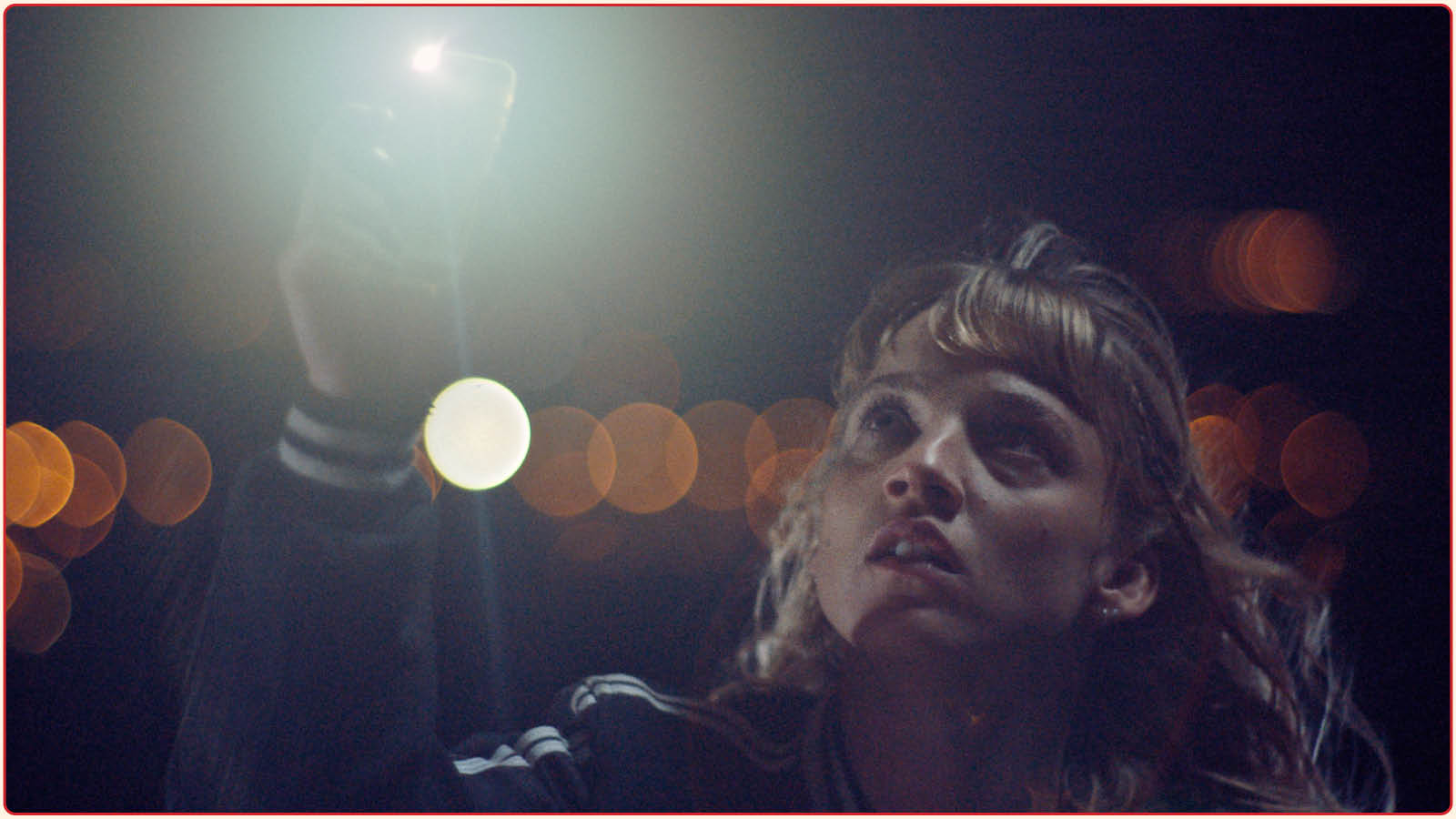
Meanwhile On Earth (2024)